
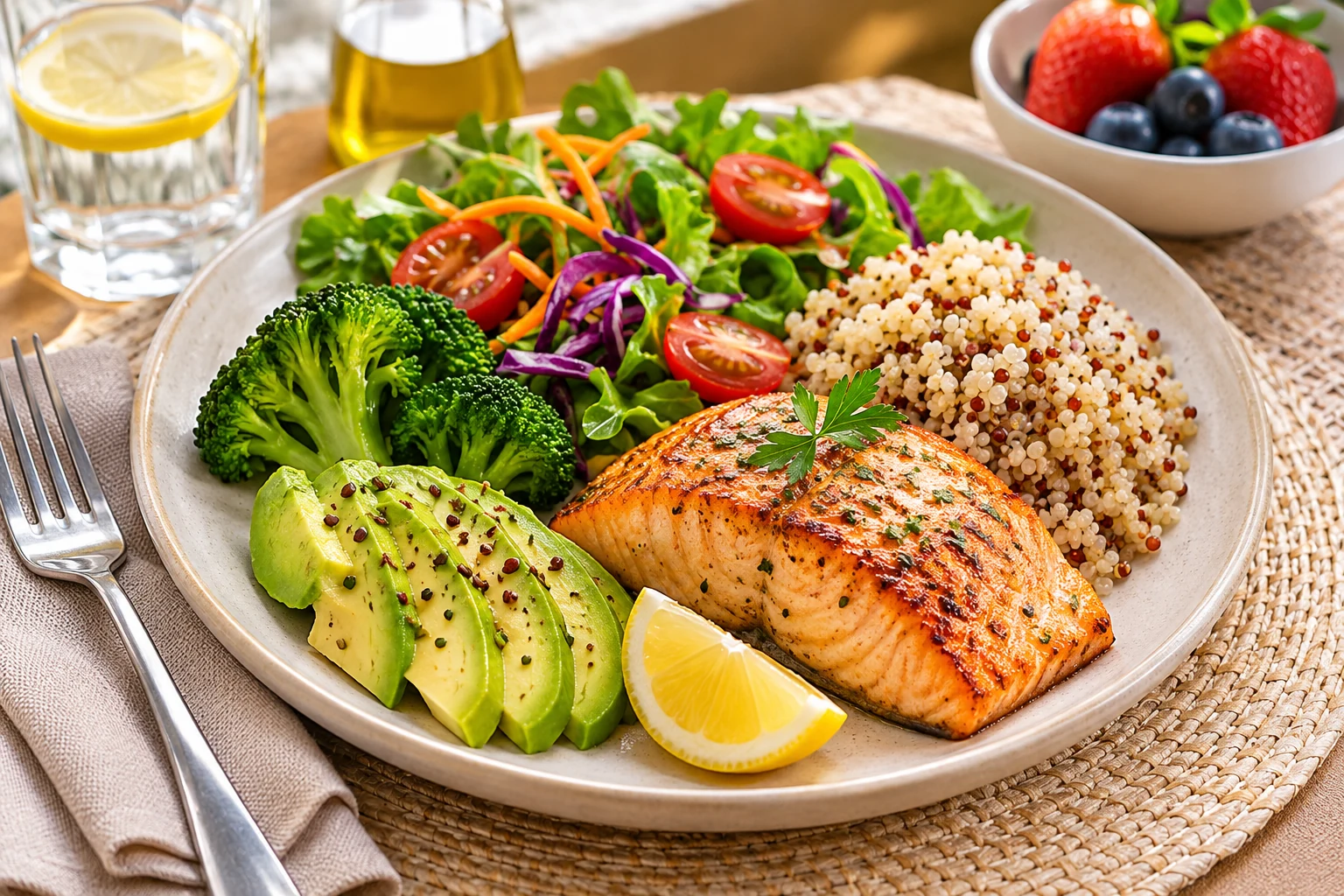
Think variety before perfection
Build meals around familiar foods rather than a perfect eating plan. Fresh and minimally processed ingredients can provide a useful foundation: vegetables, whole fruit, beans, lentils, oats, brown rice and other whole grains. Variety helps cover different nutrient needs; no single food makes a diet complete. [2]
USDA’s MyPlate brings together vegetables, fruit, grains, protein foods and dairy or appropriate fortified alternatives. Use those groups as a flexible reminder, adapted to your culture, appetite and budget. [1]
Include protein as you age
Protein supplies material for maintaining body tissues, including muscle. As we get older, it deserves a regular place in meals alongside sufficient food overall. Options include eggs, fish, lean poultry, plain yogurt, tofu, beans and lentils. The National Institute on Aging recommends varying protein sources to help maintain muscle. [3]
Food and progressive strength training work together; eating protein alone does not guarantee preserved strength or prevent sarcopenia. For the wider picture, read Muscle Strength After 50. Individual protein needs vary, particularly with kidney disease or other medical conditions; ask a qualified clinician or registered dietitian about personal requirements.
Make a flexible list
Choose a few ingredients that can do more than one job: a grain, one or two protein foods, vegetables and fruit. Add foods you enjoy instead of buying unfamiliar products simply because they look healthy. The same carrots can go into a lunch bowl, a soup or a quick evening stir-fry.
For a modest budget, compare unit prices, consider seasonal produce and store brands, and buy only what you can use or freeze. Dried lentils, eggs, oats and plain frozen vegetables can make a practical starting list. Convenience also has value when time, mobility or cooking facilities are limited.
Turn ingredients into everyday meals
- A familiar lunch: rice, beans, sautéed greens and tomatoes, with egg or chicken if desired.
- A quick dinner: fish or tofu, roasted vegetables and a baked potato or brown rice.
- A plant-based bowl: lentils, a whole grain and mixed vegetables, seasoned with herbs and olive oil.
- A simple breakfast: oats, plain yogurt or a suitable fortified soy alternative, fruit and a few nuts.
These are examples, not prescribed portions. Change the ingredients and quantities to suit appetite, access, allergies and advice for any medical condition. A balanced meal does not have to resemble a photograph.
Understand processing without judging every package
Food processing does not automatically make a food unhealthy. Freezing, drying, canning and pasteurization can help preserve foods, improve safety and make nutritious ingredients more convenient for everyday meals.
When choosing packaged foods, consider their ingredients and nutritional content. Pay particular attention to sodium, sugars and saturated fat, and compare similar products using their nutrition labels. Canada's Food Guide recommends limiting highly processed foods that contribute excessive amounts of these nutrients, while recognizing that many frozen and canned foods can be part of a balanced eating pattern. [4] [6]
Use canned and frozen foods thoughtfully
Fresh produce is useful, but frozen and canned vegetables and fruit can also be nutritious, convenient options. Compare sodium in canned vegetables and look for fruit with little or no added sugar. Draining and rinsing canned vegetables can lower sodium, although it does not remove all of it. [5]
A canned ingredient can make a meal possible on a busy day. Look at what is added and how it fits into the meal rather than rejecting all cans or jars. Vegetables in a salty sauce and plain vegetables in water deserve different assessments.
Read the label in a useful order
Start with serving size and how much you actually eat, then compare similar products. On US labels, Added Sugars are part of, not extra to, Total Sugars. FDA’s general guide is that 5% Daily Value or less is low and 20% or more is high. Check sodium, added sugars and saturated fat, along with useful nutrients such as fibre. [6]
Canadian labels use a different general threshold: 5% Daily Value or less is a little, and 15% or more is a lot. Check sugars, sodium, saturated fat and the ingredient list, which runs from greatest to least by weight. Do not apply the US 20% threshold to a Canadian label. [7]
Make one manageable adjustment
Begin with one change you can repeat: add a vegetable to a usual meal, prepare a pot of lentils for more than one dish, or keep an easy dinner ingredient in the freezer. Review what helped after a week. An affordable routine you can maintain is more useful than an elaborate plan you cannot.
Food needs are individual. Seek professional guidance for unintended weight loss, a persistent poor appetite, difficulty chewing or swallowing, allergies, or a condition requiring dietary changes. This article provides general education, not an individual meal prescription.
Sources & further reading
- USDA — Start Simple with MyPlate
- WHO — Healthy diet (26 January 2026)
- National Institute on Aging — Healthy Meal Planning: Tips for Older Adults
- Health Canada — Limit highly processed foods (4 May 2026)
- Health Canada — Eat vegetables and fruits (4 May 2026)
- FDA — How to Understand and Use the Nutrition Facts Label
- Health Canada — How to use food labels to make healthier choices (31 March 2026)
Sources consulted November 2, 2026. Links to institutions do not imply endorsement of this site or any product.