Strength has a place in everyday life
Getting up from a chair, carrying groceries and climbing stairs ask something of your muscles. After 50, paying attention to strength can be a practical investment in the activities you value. This matters to women and men, whether the goal is an easier walk, confidence at home or keeping up with family.
Building muscle strength today may help preserve independence tomorrow. This is a reason to build sustainable habits, not a guarantee about any individual's future.
What sarcopenia means — and what it does not
Sarcopenia is a muscle disorder, not simply a birthday or a description of looking less muscular. EWGSOP2 places low muscle strength at the centre of assessment. Low muscle quantity or quality supports confirmation; poor physical performance helps identify severe disease. Diagnosis requires professional assessment. [1]
- Muscle mass: how much muscle tissue a person has.
- Muscle strength: the force that muscles can produce.
- Physical function: how the person performs tasks such as walking or rising from a chair.
These are related but different. A change in one measure does not automatically establish an equivalent change in the others. Persistent difficulty with ordinary tasks deserves attention rather than a self-diagnosis from a photograph or a scale reading.
Mobility, balance and autonomy
Strength contributes to the capacity needed to stand, step and carry. Balance, vision, joint health, sensation and the home environment matter too. Increasing a gym result alone cannot guarantee fewer falls or lifelong independence.
Think about the activities that matter in your own week: stepping onto a bus, reaching a shelf or standing up after gardening. These can be useful topics to discuss with a qualified exercise or healthcare professional when setting goals.
Progressive resistance training is the foundation
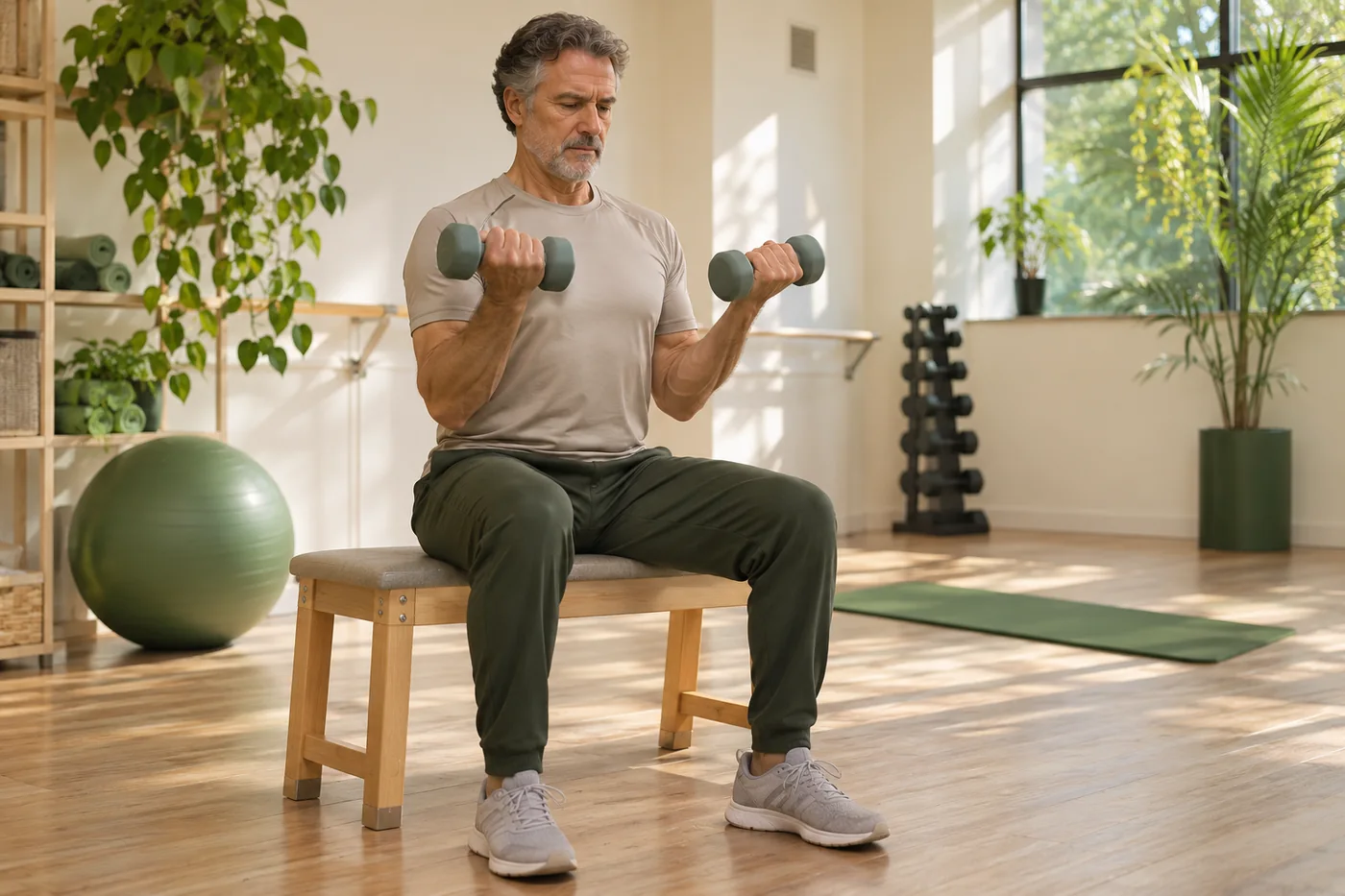
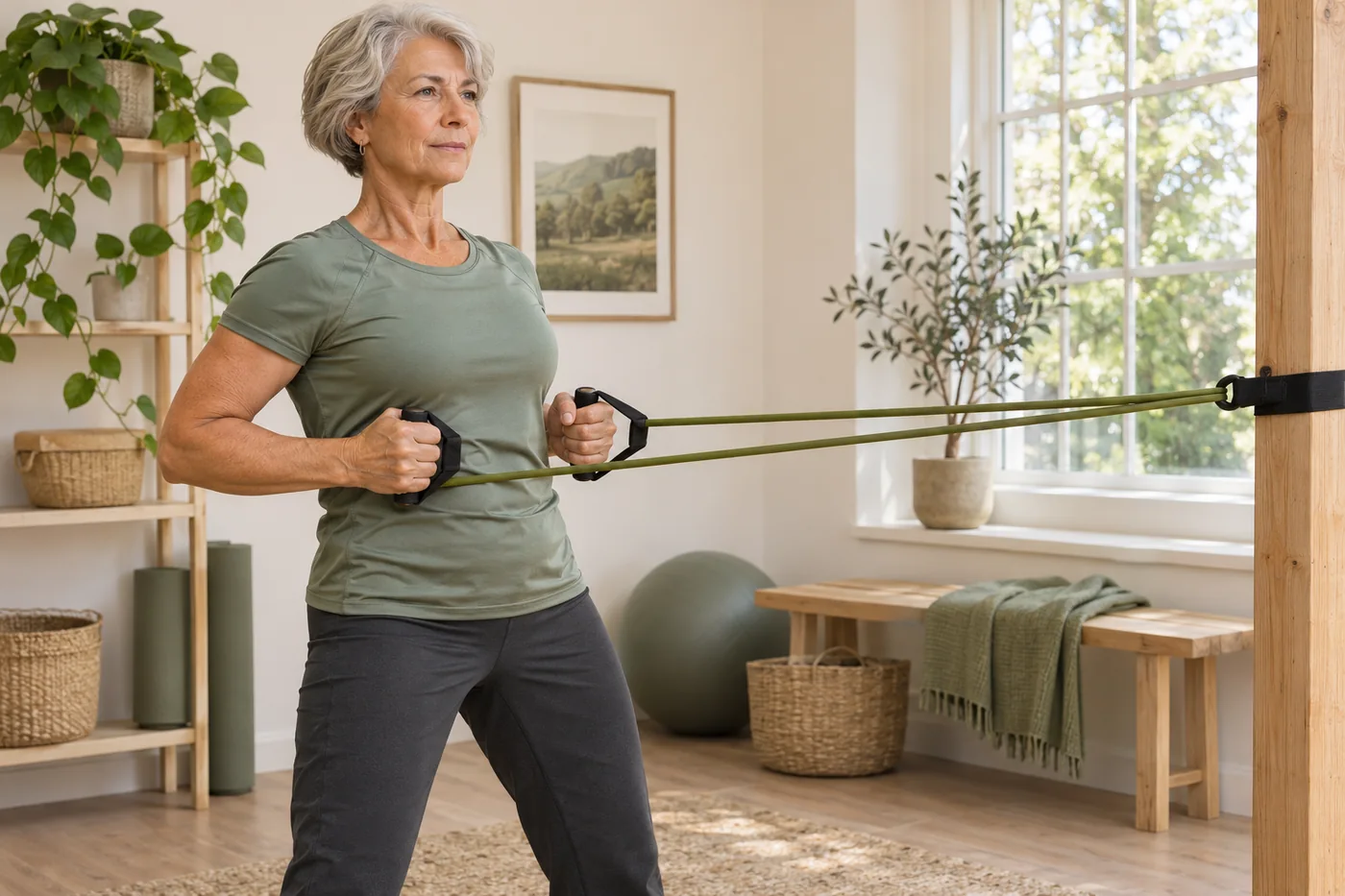
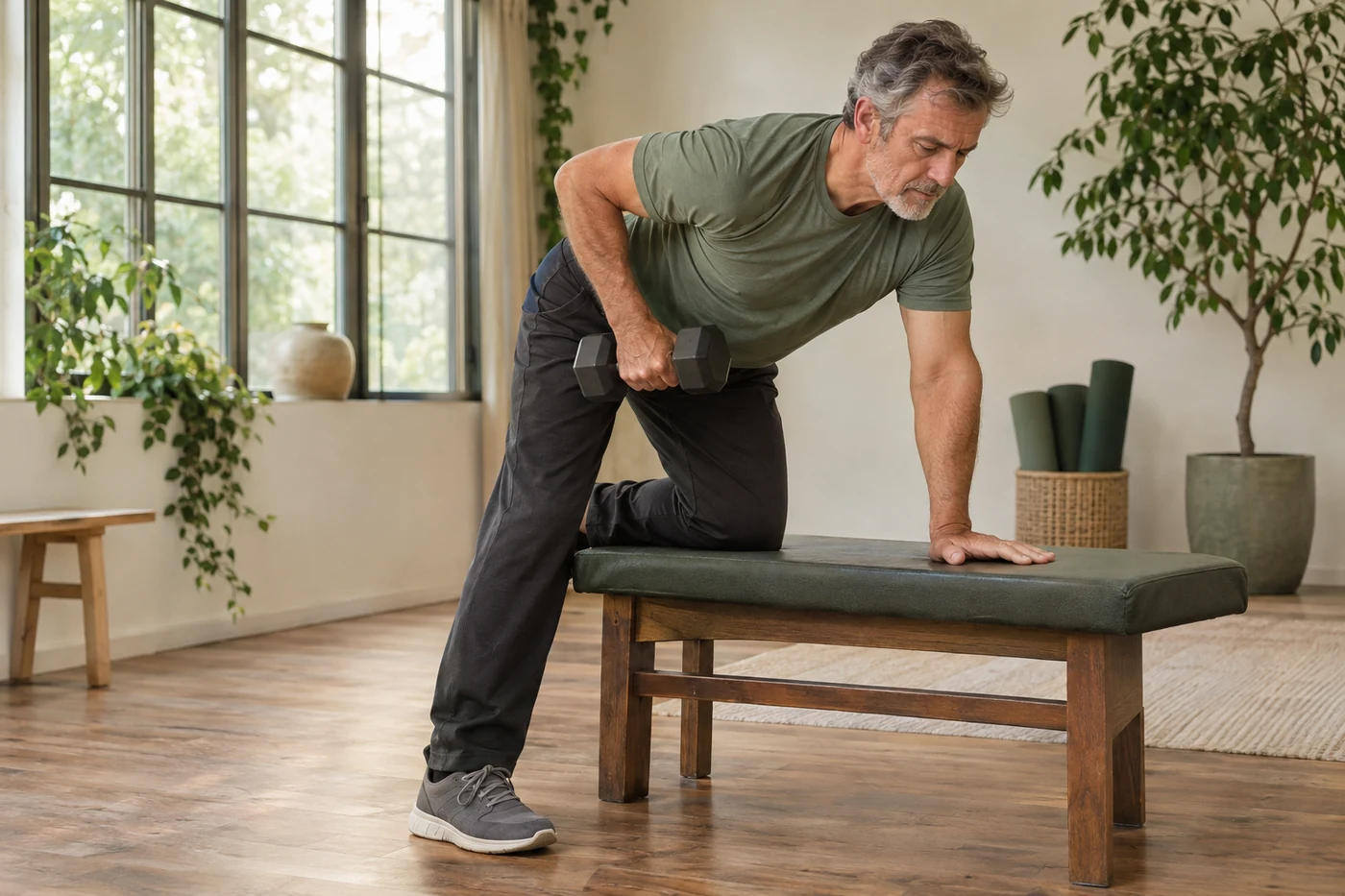
Resistance exercise asks muscles to work against a load. Machines, free weights, elastic bands and appropriately adapted bodyweight movements can all supply resistance. Progression means adjusting the challenge gradually as technique and tolerance improve; it does not mean beginning with heavy weights.
Li and colleagues' 2026 review combined 13 randomized trials in 546 older adults with sarcopenia. Pooled results favoured resistance exercise for several strength and functional outcomes, although programmes differed. This supports training, not a universal prescription. [4]
A supported chair-rise, a controlled band row or a wall push-up might be discussed as starting options. The right choice depends on pain, balance, prior experience and health conditions. Learn the movement, avoid rushing and progress only when the current version feels manageable.
Build a balanced week
WHO guidance recommends adults combine aerobic activity with strengthening of major muscle groups on at least two days each week. For adults aged 65 and over, it also recommends varied activity emphasizing functional balance and strength on at least three days weekly. These are population guidelines, not a requirement to start at the full amount on day one. [2]
Walking, cycling or other suitable aerobic activities can sit alongside strength work. Start within your current capacity and allow time to recover. An achievable plan that continues is more useful than a demanding plan you cannot sustain.
Food, protein, sleep and recovery
Adequate food and hydration support activity. Make room for protein-containing foods such as beans, lentils, eggs, fish, dairy or suitable alternatives, alongside vegetables, fruit and other foods you enjoy. Supplements do not replace an adequate diet. [3]
Unintentional weight loss, poor appetite, swallowing difficulties or a medically restricted diet call for individual advice. A dietitian can help adapt meals without imposing a generic protein target. Give sleep and recovery a regular place in the week, and tell a clinician about ongoing fatigue or sleep problems that make activity difficult.
Where creatine fits — and where uncertainty remains
Creatine is an optional supplement, not a substitute for resistance exercise. Yao and colleagues' 2026 review of 11 randomized trials in adults aged 60+ found a small additional strength benefit when it was added to training; additional effects on muscle mass and physical function remained uncertain. The participants were generally healthy, so the results should not be directly applied to frail or sarcopenic patients. [5]
Research results vary with the population, training programme and outcome. Our separately identified PrimeGENIX creatine review examines the ingredient, price and alternatives. That page contains affiliate links. No evidence discussed here establishes that this brand prevents sarcopenia or guarantees autonomy.
Start progressively and know when to ask for help
- Choose a realistic routine and a safe, uncluttered place to move.
- Ask for help with technique or adaptations if you are unsure.
- Discuss recent falls, unexplained weakness, persistent pain or a major change in walking with a healthcare professional.
- If you have a significant medical condition, recent surgery or exercise restrictions, obtain guidance before making substantial changes.
- Stop and seek medical attention for chest pain, fainting or unusual severe breathlessness during activity.
You do not need to prove that age is irrelevant. You need a starting point that respects your circumstances and can develop with you. For more everyday foundations, explore our nutrition, sleep and movement guides.
Educational information, not an individual prescription. Seek qualified guidance to interpret it in your own circumstances.
Sources & further reading
- Cruz-Jentoft AJ, Bahat G, Bauer J, et al. (2019). Sarcopenia: revised European consensus on definition and diagnosis
- World Health Organization, Regional Office for Europe (2021). Physical activity
- NIH Office of Dietary Supplements (page accessed in 2026). Dietary Supplements for Exercise and Athletic Performance — Health Professional Fact Sheet
- Li GQ, Tang SY, Luo J, et al. (2026). The intervention effects of resistance exercise on sarcopenia in older adults: a systematic review and meta-analysis
- Yao L, Yang D, Gao J (2026). Effects of resistance training combined with creatine supplementation on muscle strength, physical function, and muscle mass in older adults: a systematic review and three-level meta-analysis
Sources checked November 2, 2026. References to institutions do not imply endorsement of this publication or a product. Commercial sources are identified as such.